
Selling a house after fire damage can feel overwhelming. Still, it’s entirely possible to move forward and get a fair deal.
You have options whether your home has minor smoke damage or major structural problems. Many homeowners don’t realize they can sell their property as-is, without making any repairs.
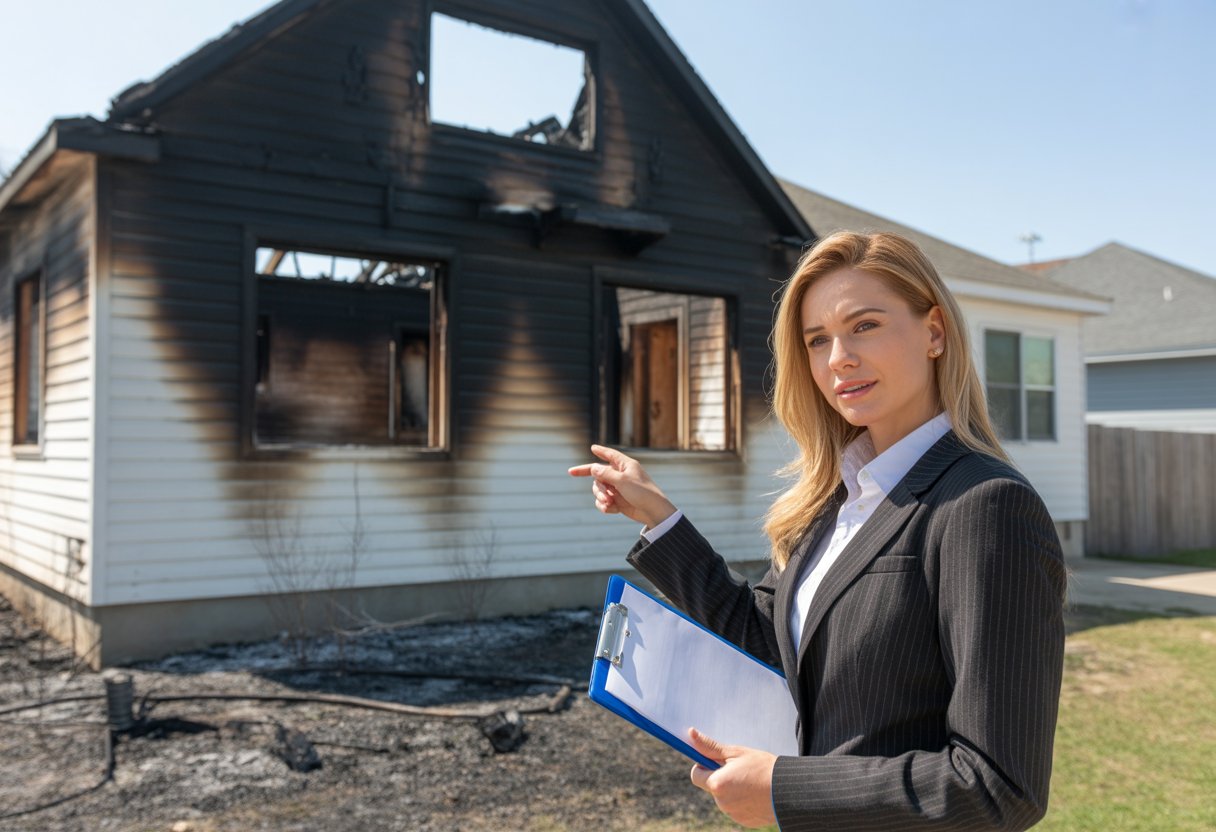
You can sell a fire-damaged house either as-is to a cash buyer or investor, or you can make repairs first and list it on the traditional market. Each approach has different benefits depending on your timeline and budget.
Cash buyers often close quickly and take the property in its current condition. Fixing up the home first might bring a higher sale price, but it requires more time and money upfront.
Understanding your options helps you make the best choice for your situation. The process involves assessing the damage, pricing the property, and being honest with potential buyers about what happened.
Key Takeaways
- You can sell your fire-damaged house as-is to cash buyers or repair it first for traditional buyers
- Honest disclosure about fire damage and proper pricing are essential for a successful sale
- Different selling methods offer various benefits based on your timeline and financial needs
How to Sell a Fire Damaged House: Key Steps and Considerations
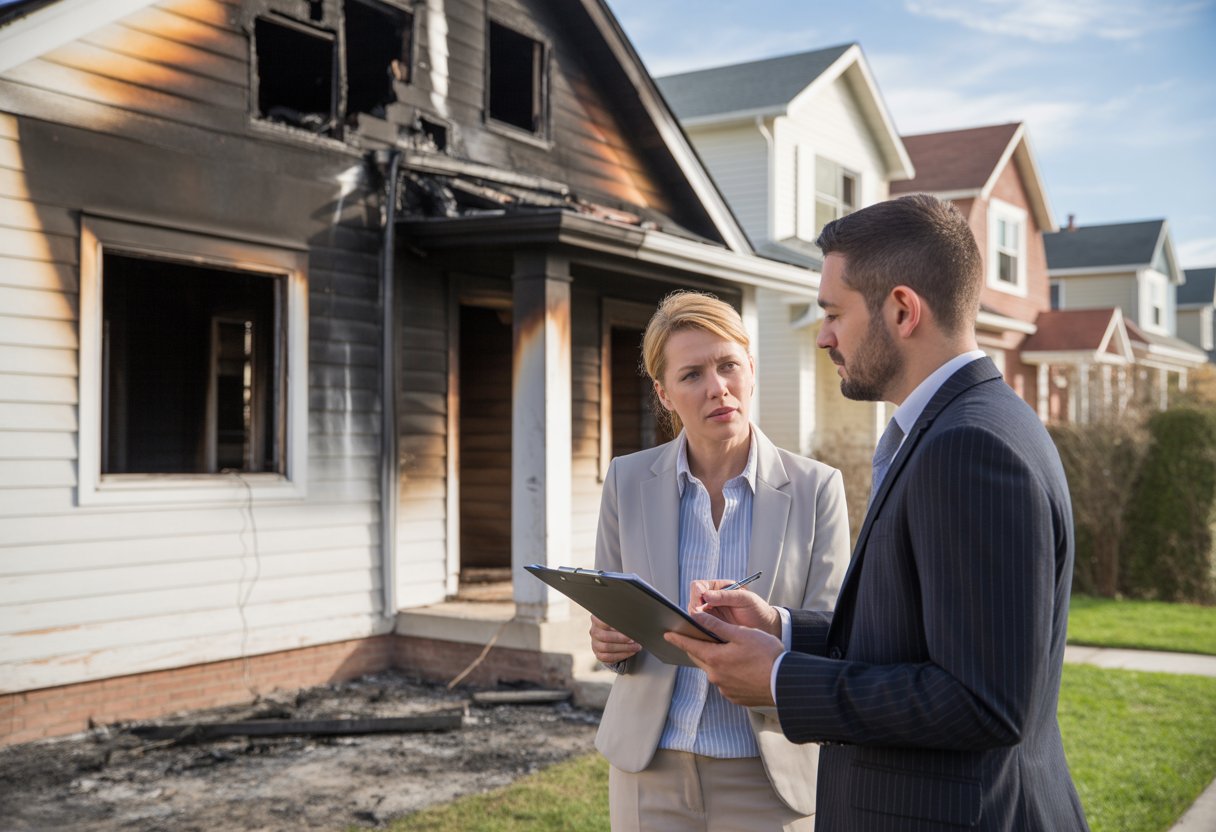
Selling a fire damaged house requires careful planning and some very specific actions to protect yourself legally and financially. You need to assess damage accurately, work with your insurance company, follow disclosure laws, and decide whether repairs make sense for your situation.
Assessing the Extent of Fire Damage
You need a professional damage assessment before making any decisions about selling your house. The fire department’s initial inspection is not enough for sales purposes.
Hire a professional home inspector who has experience with fire damage to evaluate your property. For serious structural issues, bring in a structural engineer.
These experts can identify hidden damage that you can’t see, including smoke that has penetrated walls and affected electrical systems or HVAC equipment.
What your assessment should cover:
- Structural integrity of walls, floors, and ceilings
- Electrical system safety and functionality
- HVAC system damage from smoke
- Plumbing and water damage from firefighting efforts
- Smoke damage throughout the property
Keep all reports, photos, and documentation from these inspections. You’ll need them for insurance claims, buyer disclosures, and pricing decisions.
Get an appraisal that shows both the pre-fire value and current as-is value to understand your potential financial outcomes.
Filing Insurance Claims and Documenting Everything
File your insurance claim immediately after the fire. Contact your insurance company as soon as local authorities allow you to assess the property.
Your insurer will send their own inspector to evaluate the damage. Still, you should have your own independent assessment to compare against theirs.
This protects you and helps ensure you receive fair compensation for all damage.
Key insurance questions to answer:
- What is your total coverage amount for repairs?
- Will you receive upfront cash or reimbursement after repairs?
- Does your policy cover additional living expenses?
- Are there depreciation deductions that reduce your payout?
Save every receipt, email, photo, and report related to the fire and damage. Document conversations with your insurance adjuster, including dates and what was discussed.
This documentation protects you if disputes arise and helps when selling the property.
Disclosing Fire Damage to Buyers
You must disclose fire damage to potential buyers. Failure to disclose can result in lawsuits even after the sale closes.
Disclosure laws vary by state, so work with a real estate agent experienced in selling distressed properties. They understand local requirements and can help you avoid legal problems.
Information you must disclose:
- Complete details about when and how the fire occurred
- All fire and smoke damage, including hidden damage to systems
- Repairs completed and permits obtained
- Professional inspection reports and assessments
Honesty protects you legally and builds trust with buyers. Provide all documentation upfront rather than waiting for buyers to ask.
This approach speeds up the sales process and reduces the chance of deals falling through during inspections.
If you’re looking to sell quickly in markets like Baltimore, full disclosure becomes even more important. Cash buyers and investors will conduct their own thorough evaluations anyway.
Choosing Between Selling As-Is or Making Repairs
Your decision depends on repair costs, your available funds, timeline, and how much equity you have in the property. Run the numbers for each option before choosing.
Selling as-is works best when:
- Repair costs range from $3,000 to $51,000 or more and exceed your budget
- You need to sell quickly
- You have limited equity built up in the home
- Your insurance payout offsets the reduced sale price
- The damage is mostly cosmetic or smoke-related
Making repairs makes sense when:
- You can afford the repair costs
- The damage is minimal
- You have time to manage permits and restoration work
- You want to maximize your sale price
- You have significant equity to protect
Calculate your net proceeds for each option. For as-is sales, add your insurance payout to the reduced sale price.
For repairs first, subtract full repair costs from the higher sale price, then add insurance money. As-is sales typically close in 30 to 90 days. Repair-then-sell takes 3 to 9 months.
Cash buyers and investors actively seek fire damaged properties and can close quickly without financing contingencies.
Finding Buyers and Maximizing Value When Selling a Fire Damaged House
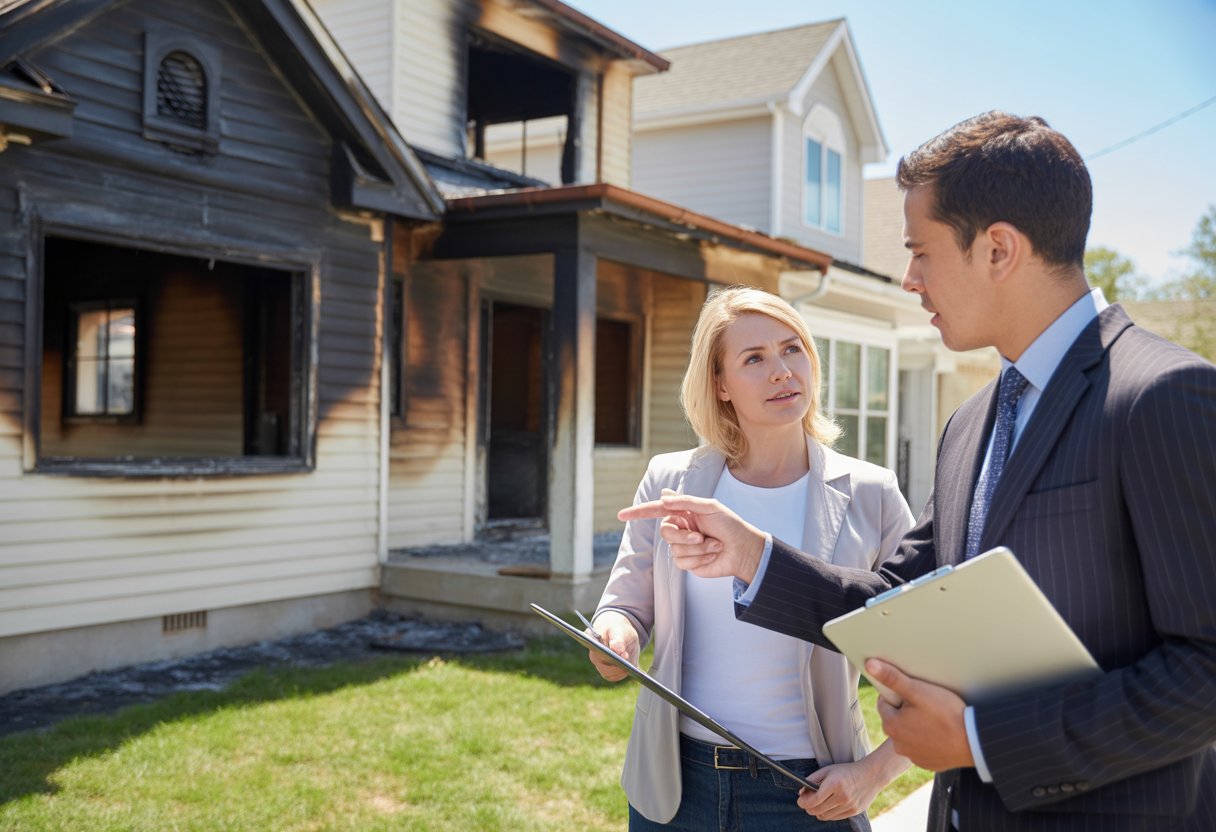
Different buyer types offer distinct advantages when selling fire damaged properties. Understanding these differences helps you choose the best path forward.
Your pricing strategy and marketing approach will determine how quickly you sell and how much money you keep.
Understanding Buyer Types: Cash Buyers vs. Traditional Buyers
Cash buyers purchase fire damaged homes in their current condition without requiring financing approval. These buyers include real estate investors, house flippers, and companies that advertise “sell my house fast baltimore” services.
They close in 7-30 days and handle all repairs themselves. You’ll receive offers 20-40% below market value from cash buyers.
But you avoid repair costs, lengthy waiting periods, and sale complications. This option works best when you need quick access to funds or face mounting expenses.
Traditional buyers use conventional mortgages or rehabilitation loans like FHA 203(k). These buyers typically pay higher prices than cash investors but require the property to meet minimum safety standards.
Many lenders won’t approve loans for homes with significant fire damage, which limits your buyer pool. Traditional sales take 60-120 days to close.
You’ll need to provide detailed damage reports, repair documentation, and pass inspections. Some buyers with rehabilitation loans finance both the purchase and repair costs, allowing them to buy properties that need extensive work.
Setting the Right Price for a Fire Damaged Property
Your pricing strategy depends on the damage extent and chosen selling method. Start by obtaining a professional appraisal that shows both pre-fire value and current as-is value.
For as-is sales, expect to discount the price by the full repair cost plus an additional 20-30% to account for buyer risk and profit margin. If comparable homes sell for $300,000 and repairs cost $50,000, price your property at $190,000-$200,000.
Consider these pricing factors:
- Damage severity (cosmetic vs. structural)
- Local market demand for distressed properties
- Insurance payout you’ve received
- Time constraints you’re facing
- Comparable sales of damaged properties nearby
Overpricing drives away serious buyers and extends your timeline. Underpricing leaves money on the table.
Research recent sales of fire damaged homes in your area to establish realistic expectations. Sometimes, finding a sweet spot for pricing just takes a little trial and error.
Marketing Strategies for Fire Damaged Homes
Target your marketing to attract the right buyer type for your situation. For cash buyers and investors, list on wholesale real estate networks, investor Facebook groups, and platforms like Craigslist.
Include phrases like “handyman special” or “investor opportunity” in your listings. For as-is marketing:
- Emphasize location, lot size, and neighborhood quality
- Provide complete damage assessment reports upfront
- Show before-fire photos to demonstrate original condition
- Be transparent about all fire and smoke damage
For repaired properties:
- Display before and after photos prominently
- Share all permit documentation and inspection certificates
- Highlight new systems and professional restoration work
- List on standard MLS platforms for broader exposure
Work with a real estate agent experienced in distressed properties. They understand disclosure requirements and connect you with qualified buyers.
Professional photos that showcase the property’s potential help generate interest even with visible damage.
Frequently Asked Questions
Selling a fire-damaged house raises specific questions about costs, legal obligations, and market realities. Understanding repair evaluations, disclosure laws, buyer profiles, and professional guidance helps you make informed decisions about your property sale.
How should one evaluate the cost of repairs for a fire-damaged house?
You need to get professional assessments from multiple specialists to accurately calculate repair costs. A licensed home inspector with fire damage experience should evaluate the visible damage first.
You’ll also need a structural engineer if there’s potential damage to load-bearing walls, foundations, or roof structures. Fire damage often hides in places you can’t see.
Smoke penetrates walls and damages electrical systems, HVAC components, and plumbing. Your initial inspection might miss these issues, which can add thousands to your final repair bill.
Get written estimates from at least three licensed contractors who specialize in fire restoration. These estimates should break down costs by category: structural repairs, electrical work, plumbing, HVAC replacement, and cosmetic fixes.
In 2026, typical fire damage repairs range from $3,000 for minor smoke damage to $51,000 or more for extensive structural damage. You should also factor in permit costs and inspection fees.
All repair work must meet local building codes, and you’ll need documentation of permitted work for future buyers.
Can a fire-damaged house be sold ‘as is’, and what are the implications?
You can legally sell your fire-damaged house as-is, with no obligation to make repairs. This route lets you skip repair costs and move the sale along quickly.
Of course, you won’t fetch top dollar—expect offers that are 20-40% below what your home would’ve sold for before the fire. Fewer buyers will be interested, since most regular mortgage lenders won’t touch properties with severe damage.
So, you’ll mostly hear from cash investors, house flippers, or buyers planning to use rehabilitation loans like FHA 203(k) or Fannie Mae HomeStyle. It’s a niche crowd, but they’re out there.
Even when selling as-is, you have to disclose all known fire damage. That means anything affecting the structure, wiring, plumbing, or HVAC needs to be on the table.
You’ll need to hand over any inspection reports or documentation about the fire. Transparency is key here, even if it feels a bit daunting.
If you got an insurance payout, that can help soften the blow of a lower sale price. Most of the time, you get to keep your insurance money, but double-check your policy or ask your agent to be sure.
What are the legal and disclosure requirements when selling a house with fire damage?
You’re required to disclose all fire damage to potential buyers, no matter if you fix things up or not. Laws differ by state, but most expect you to lay out the full history of the fire and the damage it caused.
Your disclosure should spell out any harm to the structure, electrical systems, plumbing, HVAC, and even smoke damage. Share inspection reports, fire department records, and insurance assessments—buyers will want the full picture.
If you’ve done repairs, show proof that everything was permitted and inspected. Buyers get nervous if paperwork is missing, and you can’t really blame them.
Not disclosing known fire damage can land you in legal hot water after the sale. Buyers might sue for repair costs, lost value, or even punitive damages if they feel misled.
Having a real estate agent who’s handled fire-damaged homes before can be a lifesaver with all this paperwork and legal stuff. It’s easy to miss something if you’re not familiar with the process.
Hang on to every scrap of documentation related to the fire or repairs—photos, contractor invoices, permits, emails with your insurance company. You’ll be glad you did if questions come up later.
What are the potential risks and benefits for a buyer purchasing a fire-damaged property?
Buying a fire-damaged house can mean snagging a big discount—sometimes 20-40% below the going rate for similar undamaged places. For investors, that’s a tempting profit margin. For regular buyers, it’s a shot at a fixer-upper.
But there’s a catch. Hidden damage is a real risk, since smoke and heat can mess with wiring, structural beams, or HVAC in ways you can’t always see right away. There are stories of buyers who got in over their heads with unexpected repairs.
Lingering smoke odors are another headache. They’re tough (and expensive) to get rid of. Plus, getting a traditional mortgage can be tricky—lenders get skittish around damaged homes, and insurance premiums might be higher too.
Rehab loans can help, since they let you roll purchase and repair costs into one mortgage. That opens the door to more buyers than just cash investors, which is a plus.
If the property’s in a great location or has solid land value, the risk might be worth it. But honestly, it’s not for the faint of heart.
Who typically buys fire-damaged houses and what are their motivations?
Most buyers of fire-damaged homes are real estate investors. They’re all about the numbers—after-repair value, repair costs, and how much profit they can make. Cash offers and quick closings are their thing, but don’t expect them to pay anywhere near full price.
House flippers are a special breed here. They’re hunting for deals in good neighborhoods, hoping to turn a profit with renovations. These folks usually have contractors on speed dial and know how to get a house back in shape fast.
Some buyers use FHA 203(k) or Fannie Mae HomeStyle loans to both buy and fix up the place. They might pay a bit more than investors, since they’re planning to move in themselves. The catch? They need more time to close and usually prefer homes that aren’t a total gut job.
Then there are land developers and builders. If the land’s worth more than the house (even after demolition costs), they’ll buy just for the lot. For them, it’s all about location, size, and zoning—not the charred remains of what’s left.
What kind of professionals should be consulted before listing a fire-damaged house for sale?
You’ll want a licensed home inspector who’s actually dealt with fire damage before. They don’t just spot obvious problems—they use specialized tools to hunt down hidden issues inside walls, ceilings, and systems you might never think to check.
Their report ends up being crucial for insurance claims and, honestly, for talking with buyers too.
A certified appraiser should take a look at both what your home was worth before the fire and what it’s worth now, as-is. This way, you have the numbers to help you figure out if it’s smarter to repair, sell as-is, or maybe just let go of the land.
Those values come in handy for tax reasons, and for just knowing what your real options are.
If you’re working with a real estate agent, make sure they’ve handled fire-damaged or distressed properties. Someone with that background knows all the local disclosure rules and how to price a damaged place so it actually sells.
They’ll also have connections to buyers who specialize in properties like yours, which can save you a lot of headaches.
If the fire hit anything structural—think load-bearing walls, foundations, or the roof—you really need a structural engineer. Their assessment tells you whether the place is even safe, and what absolutely must be fixed before you try to sell.
Insurance companies and buyers usually want to see a structural report if the damage is serious.
And don’t forget your insurance agent. Find out exactly what your policy covers, how payouts work, and if there are any strings attached to using that money for repairs.